
Kanchanaburi
WWII history, river kwai, and jungle waterfalls
What makes this place famous?
Images that explain Kanchanaburi
Photography first. Words second.

Kanchanaburi War Cemetery
Grief arranged in orderly rows across generations

Thailand–Burma Railway (Death Railway)
Rail, memory, sweat: iron tracks narrate labor

Erawan Waterfall
Tiered pools that keep the jungle's breath

JEATH War Museum
Catalogued fragments of lives and forced labor
Introduction
Kanchanaburi, at a glance
Kanchanaburi sits where rivers meet the low, green foothills of western Thailand: the Khwae Yai and Khwae Noi converge here and continue as the Mae Klong. In town the historic iron bridge across the river is at once an emblem and a cross‑section — a small, working place where wartime history, slow river traffic and local markets intersect beneath karst cliffs and rubber plantations.
Why visit: for an uncommon mix of things that feel separately large in the country — honest WWII history and memorials, accessible jungle and waterfalls in national parks, and a riverside pace that suits walking, boat rides and reflective afternoons. Kanchanaburi asks you to move at river speed while the landscape alternates between raw limestone, teak regrowth and emerald pools.
Why should I come?
Why visit Kanchanaburi?
What makes this place famous? Visit for concentrated WWII history, riverside life on the Khwae Yai, and easy access to jungle waterfalls; three focal visits — museums, a railway ride, and a waterfall day — form a single coherent trip. The town frames story, river and forest into a compact visit that balances study, motion and green air. Come prepared to listen.
Country
Thailand
Currency
Thai baht
Language
Thai
Airport
Don Mueang International Airport (DMK) — Bangkok (nearest major international airport to Kanchanaburi)
Time Zone
ICT (Indochina Time), UTC+7
Best Time
November–February
What shouldn’t I miss?
Kanchanaburi's must-see sights

Hellfire Pass Memorial Museum and Walking Trail
A stark railway cutting carved by POWs and Asian labourers during WWII; the museum preserves oral histories, tools and photographs, while the cliff-edge trail follows the original trackbed through sunlit eucalyptus and the echo of distant hammers.
View Details
Prasat Mueang Singh Historical Park
An unexpectedly preserved Khmer sanctuary on a riverside promontory, with 12th-century sandstone towers, lintels carved with apsaras, and warm stone underfoot that tells of pre-Siamese southeastern trade and ritual.
View Details
Sai Yok Noi Waterfall
A curtain of limestone-fed water dropping into emerald pools beside shady picnic lawns; the falls are a popular short excursion offering cool spray, riverbank cafés, and easy access from Kanchanaburi town.
View Details
Huay Mae Khamin Waterfall
A multi-tier cascade in Khuean Srinagarindra National Park where quiet limestone steps form turquoise pools; reach successive tiers by a shaded trail and hear cicadas and river stones underfoot.
View DetailsDid You Know?
A city of small surprises
The facts that change the way you see it.
The railway and its legacy
The Bangkok–Burma railway, known locally as the Death Railway, was built under Japanese direction during World War II using Allied prisoners of war and Asian laborers; many sections, including the bridge at Kanchanaburi, remain important historical sites and memorials.
Seven-tiered waterfalls
Erawan National Park, within easy reach of Kanchanaburi town, is famed for its seven-tiered Erawan Falls whose limestone basins hold strikingly clear, green water fed by karst springs and seasonal runoff.
What experiences can I book?
Keep exploring Kanchanaburi
Tap an attraction to open Makutet Experiences, filtered for Kanchanaburi.
What do locals know?
Practical insight from people who've lived it
Mueang Kanchanaburi
Mueang Kanchanaburi is the riverside town centre along the Khwae Yai River, where guesthouses, markets and wartime museums cluster near the old railway and bridge, giving easy walking access to key services and river piers.
Boat noodles (kuay tiaw rua)
Boat noodles in Kanchanaburi are sold in small bowls at riverfront stalls and feature a concentrated pork or beef broth, herbs and flat rice noodles — a lunchtime staple after museum visits and market walks.
Kanchanaburi Night Market
Kanchanaburi Night Market on the riverside road comes alive at dusk with grilled river prawns, snacks, clothing stalls and local handicrafts, and it is a practical place to sample street food and buy artisanal souvenirs while the river cools.
Ban Kao Archaeological Museum
Ban Kao Archaeological Museum displays finds from the Ban Kao prehistoric site, including Neolithic to Iron Age pottery and bone tools, offering cultural context beyond wartime narratives in serene rural surroundings.
Rim Khwae Riverside Quarter
A cinematic stretch along the Khwae Yai where teak shophouses, sleepy guesthouses and ferries rub elbows with the iconic River Kwai Bridge. Taste the smoky tang of grilled fish from riverside carts and listen to the soft chatter of vendors at dawn; stroll the riverbank at sunrise, because the bridge and boat traffic turn cinematic in the low light and mist.
Sai Yok Noi Riverside Hamlet
Tucked below limestone cliffs beside the roar of Sai Yok Noi waterfall, this hamlet feels like a postcard full of banana plantations and slow long-tail boats. Smell the wet stone and jungle after a rain, and watch local children skip stones in the shallows; take the short footpath to the falls in the late afternoon, because the light softens and the pool becomes a gentle mirror for photographs.
Sangkhlaburi Mon Bridge Lane
Where a 300‑metre wooden bridge stitches two cultures together: Mon traders on one bank, Thai markets on the other, and boats bobbing like punctuation on the Songkhram river. Hear the hollow clack of planks underfoot and the soft bargaining voices in Mon dialect; cross the bridge at sunset, because the long silhouette and warm market lights reward the short walk with unforgettable panoramas.
Tha Muang Canalside Quarter
A patchwork of narrow canals, rubber plantations and low wooden houses where morning markets spill over with chilli, lemongrass and sticky rice. The scent of lemongrass and frying coconut clings to the air near the packing sheds; hire a local long‑tail to glide the alleys, because waterborne routes reveal quiet temples and fishermen’s routines that roads simply bypass.
Book it
The moments worth booking ahead
Curiosity becomes a plan. These are the experiences that turn a wish list into a date in your calendar.
Death Railway ride
Book the tourist train along the historic Death Railway for a full riverside journey and contextual audio, because the route links wartime sites with living river towns.
A river sunset
Reserve a River Kwai sunset cruise to secure a good seat for low-light views, fragrant river air and the slow motion of town life from the water.
Erawan waterfalls day trip
Arrange a guided day trip to Erawan National Park in advance to smooth transport and trail time, and to arrive early for clearer pools and cooler air.
Elephant sanctuary visit
Book a day visit at a reputable Kanchanaburi elephant sanctuary to ensure an ethical experience and quiet personal time with rescued animals.
The story of Kanchanaburi
How Kanchanaburi came to be
Kanchanaburi’s human geography is inseparable from its waterways. The town grew where the Khwae Yai and Khwae Noi join, a natural crossroads for river traffic and seasonal trade. Long before modern tourism, those river routes linked upland teak and forest products to markets further south. Ethnic groups including Mon and Karen communities have long shaped the riverine culture here, leaving a patchwork of villages, temples and vernacular buildings that still punctuate the landscape.
The 20th century altered Kanchanaburi’s trajectory. The construction of the railway to Burma in wartime transformed both the terrain and the collective memory of the place. The line—laid hastily under extreme conditions by forced labour—left scars and graves that the town has since attempted to acknowledge and interpret. The bridge that crosses the river became an international symbol after the publication of fiction and the later film, but to locals it remained a working structure and a locus where the town’s wartime experience is both commemorated and argued over.
Post‑war decades saw Kanchanaburi reposition itself: memorials and cemeteries were created, museums opened to document the railway’s human cost, and conservation areas were set aside in the province’s hills. Tourism brought visitors to the bridge and the war cemetery, but also encouraged broader engagement with the province’s natural assets: Erawan’s tiers, caves in limestone outcrops, and the quieter cascades of Sai Yok. Today Kanchanaburi negotiates that dual heritage—an insistently public history and a quieter, greener hinterland—offering both remembrance and routes into the landscape.
Where should I stay?
Where to stay in Kanchanaburi
Curated stays chosen to suit every kind of traveller.

U Inchantree Kanchanaburi
First-timers · photographers · romantics
A boutique riverside hotel steps from the Bridge and markets, known for teak furniture, shaded terraces and river views; it suits easy walking to town museums and provides calm rooms for recovering after long day tours.
Check availability
The FloatHouse River Kwai
Couples · design-minded · river lovers
An intimate floating-villa resort on the river offering wooden pontoon suites, private terraces and direct river access; its unusual riverside architecture suits couples and travellers seeking a distinctive overnight on the water.
Check availability
Felix River Kwai Resort
Families · mid-range · active travellers
A family-friendly resort with gardens, pool and easy access to the Bridge and nearby attractions; bedrooms range from budget to family suites, making it a practical base for multi-day waterfall and park excursions.
Check availabilityWhere should I stay?
Founder's recommended stays in Kanchanaburi
Where the Makutet founder stayed in person — and would stay again.
 Founder 4.7
No.9 Hostel
Kanchanaburi, Thailand
A reliable, humble base for long-distance cyclists exploring Kanchanaburi.
Why this destination?
Why Kanchanaburi, and not somewhere else
At dawn, the river is a wide, slow sheet of grey and blue; mist slips off the shoulders of karst hills and fishermen move like punctuation on the water. Walk the riverside path toward the famous span and the angle of light shifts the bridge’s steel from pewter to pale gold. There is nothing theatrical here—no grand gesture—only the accumulation of small things: a vendor lighting a brazier, a monk crossing the bridge, a convoy of long-tail boats putting out from a low timber jetty.
Take the short train that follows the old Death Railway toward Nam Tok and you pass through a landscape of mixed uses: patches of regrowth teak, stands of rubber, abrupt limestone cliffs, and villages where chickens and children are playfully indistinguishable to a passing visitor. The line itself is part museum, part working transport; the ride is an uneasy, necessary reminder that this serene valley once lay along one of the harshest industrial projects of the Pacific War.
Arrive at Erawan National Park on a bright morning and the world changes again: seven stepped falls tumble into pools polished by centuries of rock and water, jade and turquoise basins that invite a deliberate, cold plunge. Climb slowly between the tiers and listen—voices echo off rock, water writes new edges into old stone. The park is cared for but not sacralized; people come to swim, picnic and trail, and the experience is oddly extended and ordinary at once.
End the day back in Kanchanaburi town at a riverside guesthouse or a simple rafted bungalow. Share a plate of grilled river fish, papaya salad and sticky rice with strangers who have come for the same pale sunset. Walk the bridge one last time in evening light and stand where history and local life converge; the moment is not only about remembering what was lost here, but about the persistence of a working river town that continues to live, mourn and find its own rhythm. It is a place where the present arrives quietly, in the sound of water and the steady beat of daily life.
Can I book somewhere to stay?
Where to stay in Kanchanaburi
Live rates across Booking.com, Agoda, VRBO and Hotels.com — compare in one search, no extra cost to you.
Popular destinations

สวนไผ่รีสอร์ท

นพรัตน์การ์เด้นฮิลล์

Green House Resort Praduyuen
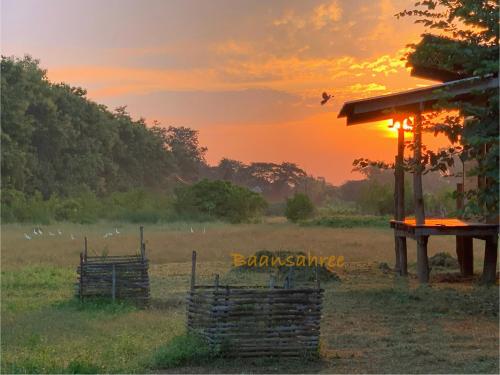
Baansahree Farmstay

นกฮูกโฮมสเตย์ หุบป่าตาด

Ban Huaikhakhaeng บ้านห้วยขาแข้ง

บ้านไร่ ฮิลล์
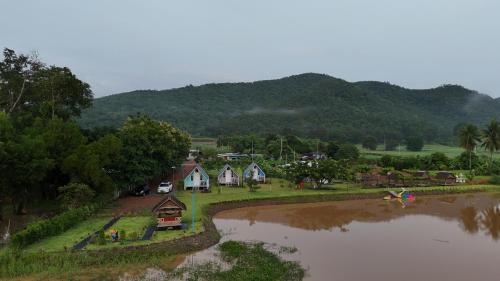
ลุงไซยเดอะแคมป์

มองเขา ชมดาว รีสอร์ท
Live rates across our partner network (Booking.com, VRBO, Expedia, Hotels.com) via Stay22. Makutet may earn a commission when you book — at no extra cost to you. Prices update in real time and may vary before booking.
When to come
Planning your Kanchanaburi trip
There is no bad time to visit — only cheaper and cooler.
November – February
Cooler mornings and lower humidity make walking and waterfall visits more comfortable; river levels are manageable for boat trips and the skies are usually clear.
March – May
Temperatures climb; early starts and water-based activities help, but midday heat can be intense for long walks or exposed viewpoints.
June – October
Heavy rains can make some rural roads slippery and increase river flow; waterfalls are dramatic and lush but access to some trails and viewpoints may be limited.
What else do I need for my trip?
Everything else for your trip

Flights to Kanchanaburi
Find the best flights to Kanchanaburi.
Explore
Accommodation in Kanchanaburi
Discover the best hotels and resorts in Kanchanaburi.
Explore
Airport Transfers
Arrange transport between Kanchanaburi Airport and your accommodation.
Explore
Car Hire
Explore Kanchanaburi and surrounding regions with a rental vehicle.
Explore
Travel Insurance
Protect your trip before travelling to Thailand.
Explore
eSIM & Connectivity
Stay connected throughout your visit to Kanchanaburi.
ExploreWhat do I need before travelling?
What you need before you go
Use songthaews and local buses
- ·Use songthaews and local buses, because fares are low and routes hug the river and town, and you'll stretch a budget while moving like a local along the quay and market streets.
Train and bus basics
- ·Reserve a seat on the Death Railway train, as the route follows the original line and provides uninterrupted riverside views, letting the carriage's clack set the rhythm of the day along the Khwae.
Lock valuables and carry ID copies
- ·Keep a copy of your passport and lock valuables in your room, since petty theft and opportunistic loss happen in busy markets; carry a small money pouch for evening market walks and river breezes.
Buy a Thai SIM for maps and calls
- ·Buy a local SIM at 7‑Eleven or an AIS/True shop, because reliable data helps with boat timetables and trail maps, and you'll feel anchored to routes and river-time while exploring.
Seasons, monsoon timing and what to pack in Kanchanaburi
- ·Kanchanaburi's climate flips from a luminous dry season (Nov–Feb) to blistering heat (Mar–May) and then a lush monsoon (May–Oct) when the River Kwai rises and waterfalls thunder. Humidity intensifies local scents—the earthy tang of wet teak near the Bridge over the River Kwai—and turns dirt tracks slick and slippery. Plan ahead, since higher river levels can alter boat timetables and trail access, and pack moisture-wicking layers, to avoid clammy discomfort in humid nights. Bring a light rain shell, to stay dry during sudden squalls, and a flexible mood.
Motorbike rentals, road safety and practical checks around the River Kwai
- ·Motorbike hire is the easiest way to reach waterfalls and backroad villages around Kanchanaburi, but the terrain demands common sense: monsoon rains expose potholes and gravel on secondary routes and narrow bridges test confidence. The air often carries the dry dust of roadside markets and the distant clack of trains on the Death Railway, a constant local soundtrack. Check the bike's brakes and tires, before you leave, since roadside garages can be scarce on quieter stretches, and verify insurance and helmet condition, so you won't be left without cover after a mishap. Carry an international driving permit, if your insurer requires it, to ensure legal protection, and allow extra travel time, giving you space to savour slow River Kwai sunsets.
Good to Know
Kanchanaburi FAQs
Final inspiration
Go and see for yourself
Kanchanaburi resists being flattened into a single story. It will present itself to you in layers: the bridge and cemetery that hold a difficult history, limestone forests and emerald pools that invite immersion, and afternoons along the river where time is measured by boats and market calls. Travel here is equal parts study and slow observation.
Leave space for both. The most durable impressions from Kanchanaburi are rarely instant: a late light on the river, the sound of footfalls on the wooden bridge, the taste of grilled river fish at a riverside stall. These are the details that stay with you after the guidebooks are folded away.
See It Through A Creator's Eyes
Want to discover Kanchanaburi through people who have actually experienced it?
Explore Kanchanaburi through the stories, photos, and perspectives of travel creators who have been there.
Find Creators Who Have Been to Kanchanaburi