A Green and Pleasant Land
England
London's swagger and the Cotswolds' hush. Stonework, hedgerows, and the long memory of an island that wrote half the world's stories.
Plan with Makutet AI
Plan your England trip in minutes
Tell us how long you have, who you're travelling with, and what you love. Makutet AI builds the itinerary — destinations, transport, stays, day by day. Free to use, no travel-agent fees, no booking friction.
What makes England famous?
Images that explain England
Photography first. Words second.

Tower Bridge at dawn
London's most photographed crossing — and proof the city looks its best before it wakes up.

Lake District fells
Where Wordsworth walked — and where England's most-loved landscape begins.

Cotswolds stone
Honey-coloured stone, sheep-nibbled greens, the slow heart of rural England.

White Cliffs of Dover
The first welcome home and the last goodbye.
Introduction
England, at a glance
England is small. You forget this until you place it on a world map and watch it almost disappear. Yet within a few hours' drive the country will hand you a Welsh-border castle, a chimneyed Cotswold lane, a London rooftop bar, and a wind-scoured Yorkshire moor — the kind of compression you only notice when you stop and look back.
Travelling England well is mostly about choices. London alone can swallow a week. Pin down what you want — deep countryside, cathedral cities, dramatic coast, theatre and pubs — and the rest of the country opens up. Almost everything is reachable by train, and no other nation packs its landscape so densely into two hours of track.
Why should I come?
Why visit England?
The draw is depth, not distance. Nine hundred years of stonework stands within a morning's drive of a 21st-century capital. Cathedrals that took a century to build. Country pubs that have outlived three monarchies. The whole country feels inhabited by its own past — and you walk through it, not around it.
The landscape does the rest. The Lake District fells, the white cliffs of the south coast, the saltmarsh of Norfolk, the moors of Yorkshire and Northumberland. National Parks cover ten percent of the land. There is no point in England more than seventy miles from the sea, and most of the coastline is footpathed from end to end.
London is its own draw — a global capital of theatre, finance, food, and argument — but the real surprise of England is how quickly the city hands back to the countryside. An hour on a train from King's Cross and you are walking a stone wall in Northumberland with no one for miles.
Capital
London
Currency
GBP (£)
Language
English
Main Airports
LHR · LGW · MAN
Time Zone
GMT (UTC+0)
Best Time
May – Sep
Should I come?
Decide in one read
The clear-headed summary of what it takes to come to England.
Best time
May – Sep
Long days, mild evenings. Bank Holiday weekends heave — book early.
Visa / ETA
Visa-free 6 months
UK, USA, EU, CA, AU, NZ. ETA required from 2026 — apply 3 days ahead.
Currency
GBP (£)
Cards accepted nearly everywhere. Tipping 10–12.5% at restaurants.
Daily budget
£80 – £350
£80 budget (hostel + pub meals) → £200 mid-range (hotel + restaurants) → £500+ luxury.
Best way around
Train
National rail reaches nearly every town. Drive for deep countryside.
Language
English
Universal. Some Welsh in Wales.
Where should I go?
The regions of England
A country is many countries in one. Pick the one that fits the trip you want.
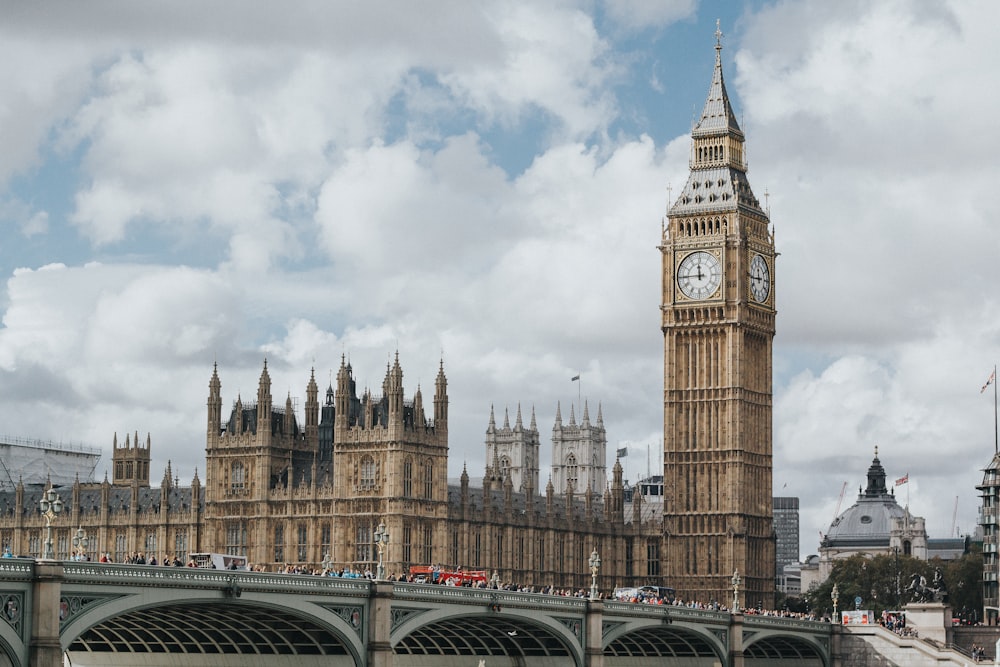
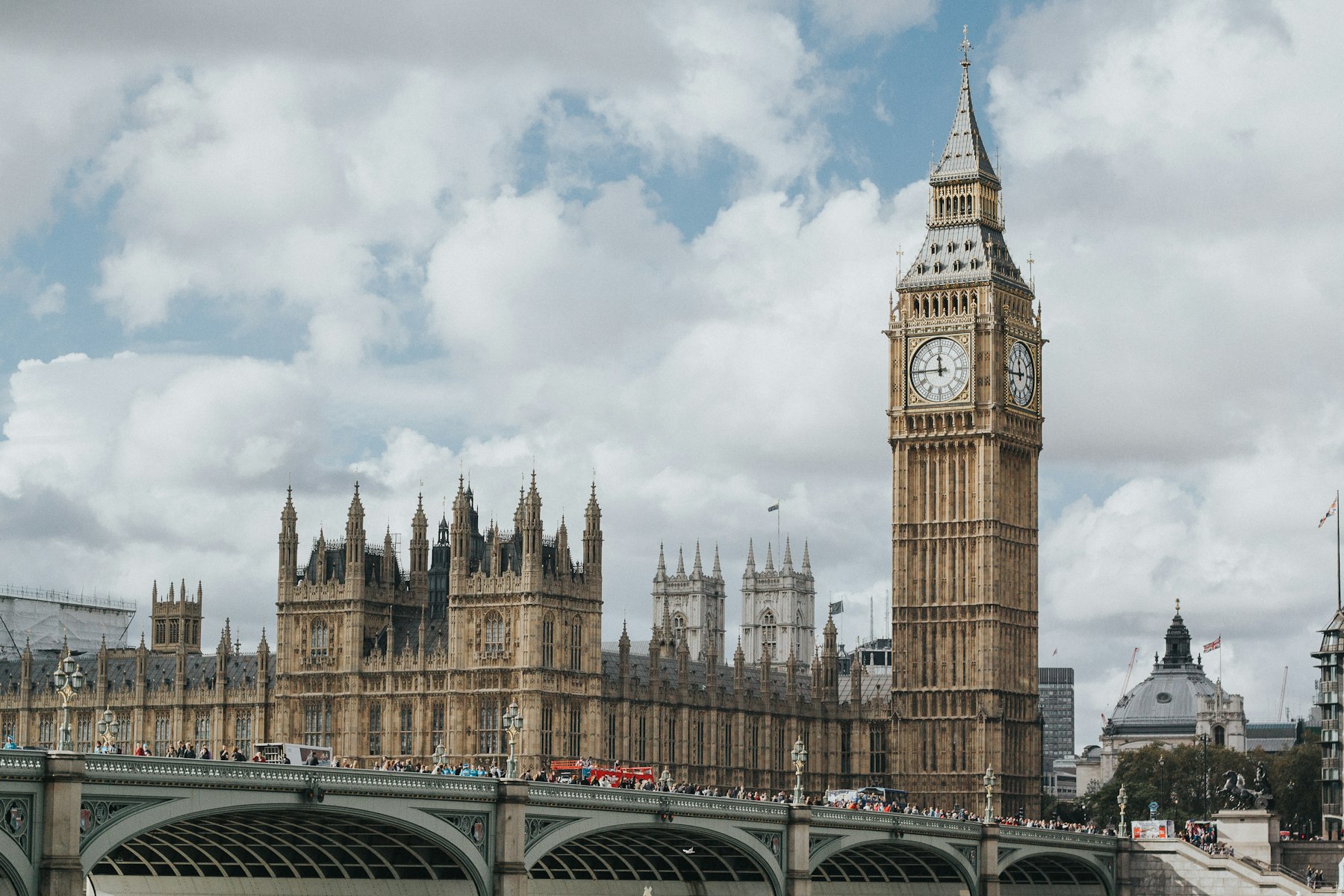
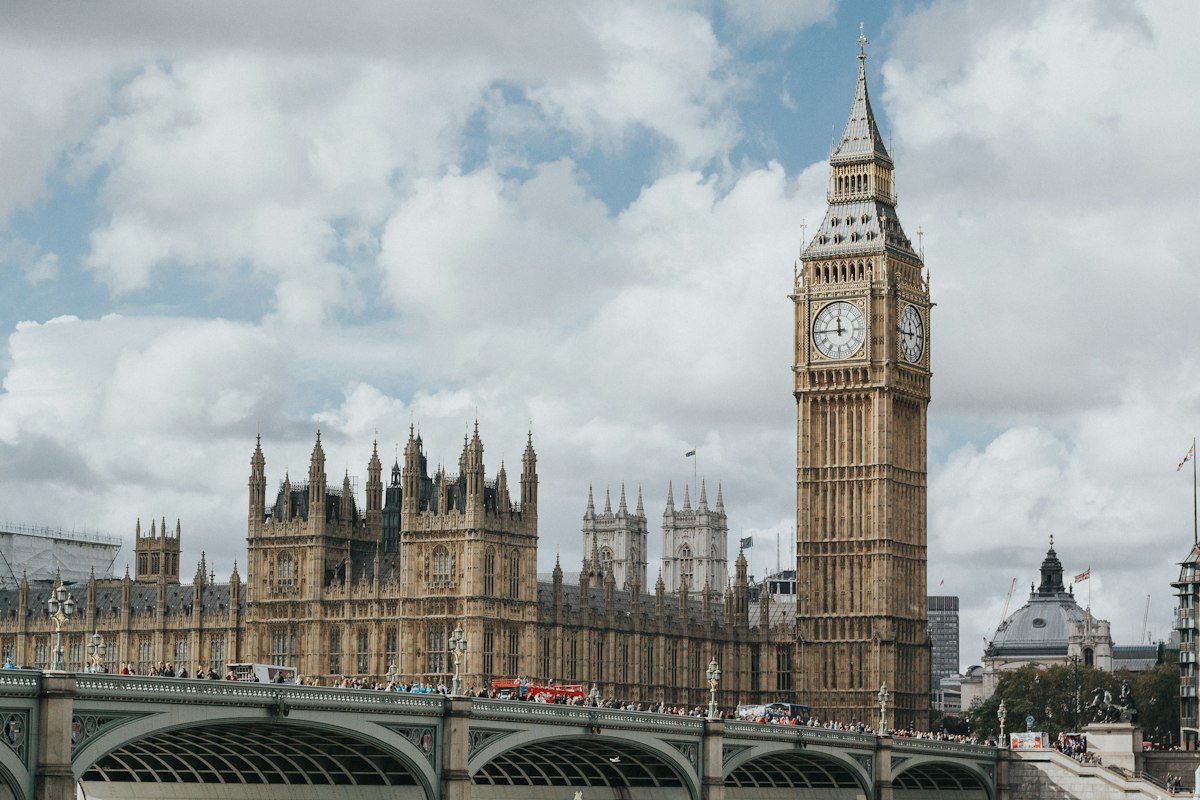
London
World capital: theatre, museums, the river, and a thousand neighbourhoods.

Cotswolds
Honey-stone villages and rolling farmland — the English countryside at its most photographed.

Lake District
Fells, meres, and England's most-walked landscape — where Romantic poetry was born.
Cornwall
Atlantic coast, cream teas, art colonies, and surf at the country's southern edge.

Yorkshire
Moors, dales, medieval York, and the biggest, brashest of the English counties.

Oxford & Cambridge
Two university cities, two centuries of ivy, libraries and college lawns.
Northumberland
The last wild county: castles, dark skies, and Roman ruin.

Devon & Dorset
Fossil cliffs, the Jurassic Coast, and the slow south-western seaside.
Where should I go first?
Signature destinations in England
England is many places at once. These are the destinations worth opening a full guide for.
A week is barely a startLondon
Theatre, museums, the river, and a thousand neighbourhoods. A world capital.
Open the London guideThe world's oldest English-speaking universityOxford
Colleges, libraries, dreamy spires. Bodleian, Christ Church, and punting on the Cherwell.
Open the Oxford guideSpa city, golden stoneBath
Roman Baths, Georgian crescents, Jane Austen's England — all of it World Heritage.
Open the Bath guideEngland's most walkable old cityYork
Medieval walls, York Minster, the Shambles, and a thousand ghosts per square mile.
Open the York guideThe other university cityCambridge
Colleges along the Cam, punting on the Backs, a smaller, calmer sister to Oxford.
Open the Cambridge guideWalking countryWindermere & the Lakes
England's deepest lake, the Romantic poets' home, the country's most-loved landscape.
Open the Windermere & the Lakes guideWhat journey should I take?
Signature journeys through England
England doesn't reveal itself in one stay. These are the classic journeys that connect its regions.
 7 daysTrain
London → York → Edinburgh
The classic East Coast main line — King's Cross to Edinburgh in 4h20 with two days in York's medieval core on the way.
Plan this with AI 5 daysTrain + walkCotswolds Ramble
Oxford through the honey-stone villages — Bourton, Stow, Broadway — to Bath. Walk between two villages a day; train the gaps.
Plan this with AI 5 daysTrain + hikeLake District Literary Trail
Windermere → Grasmere (Wordsworth) → Keswick → Scafell base. A walking itinerary through the country's most-loved landscape.
Plan this with AI 7 daysCarSouth-West Coastal Loop
Bath → Dorset Jurassic Coast → Cornwall creeks → Devon moors. The country's most-photographed coastline in one loop.
Plan this with AIWhat shouldn't I miss?
England's must-see sights
 4.7
4.7Tower of London
Nine centuries of royal history on the Thames — Crown Jewels, ravens, and the city's oldest fortress.
View Details 4.6
4.6Stonehenge
Neolithic monument older than the pyramids — silent on Salisbury Plain at dawn.
View Details 4.7Roman Baths
Sacred hot springs under Bath — the most complete Roman religious spa in Northern Europe.
View Details 4.8York Minster
The largest medieval gothic cathedral in Northern Europe, in England's most walkable old city.
View Details 4.9Scafell & the Lake District
England's highest fells and deepest lakes — the country's most-loved landscape.
View Details 4.7
4.7Bodiam Castle
A perfect 14th-century moated castle in East Sussex — the romantic medieval postcard.
View DetailsDid You Know?
A nation of small surprises
The facts that change the way you see it.
A NATION OF SHRINES
England has more than 30 UNESCO World Heritage Sites — from the 185-million-year fossil record of the Jurassic Coast to the Ironbridge Gorge forges where the Industrial Revolution quite literally began. Travel a hundred miles and you cross four centuries of engineering history.
PEAK DISTRICT WAS FIRST
The Peak District became the United Kingdom's first National Park in 1951, after the 1932 Kinder Mass Trespass — a working-class walking movement that broke open private hunting estates and reshaped public access to the British countryside. Every footpath you walk today carries that fight.
What's the country really about?
The rituals that define England
Beyond the monuments — the everyday rituals that make England England.
The Pub
The pub is the village parliament — a public living room with no cover charge. Order at the bar, settle in for the evening, and you're a regular by week three.
Theatre & West End
London's West End mounts more new shows each year than Broadway. Three plays a night is normal in a culture that takes theatre seriously.
Monarchy & pageantry
Trooping the Colour, the State Opening, Windsor wreaths. England keeps a thousand-year political theatre alive for free, with great seats.
Saturday sport
Premier League football, Six Nations rugby, Test cricket. Walk into a pub on a Saturday afternoon and you'll emerge three hours later with a new allegiance.
Music & literature
From the Brontës' parsonage to the Cavern Club. Music and literature are not heritage here — they're the soundtrack of the present.
What do locals know?
Practical insight from people who live it
Pubs and rounds
Order at the bar. In a group, take turns buying rounds — declining a round is a small social injury.
Driving on the left
Drive on the left, watch the 30 mph speed limit in towns (camera-enforced), and mind narrow country lanes with passing places.
National museums are free
Major national museums in London (British Museum, National Gallery, V&A, Tate) are free to enter — special exhibitions are paid.
Tea, done properly
Tea is served hot with milk. Hotel kettles are sacred. Coffee is excellent in cities; tea remains the country default.
What should I eat?
Food in England
English food was once the world's punchline. It has shut up its critics. The country still does the rustic things better than the world gives it credit for — the roast Sunday lunch, the cream tea, the chippie on a cold beach — and it has also given the world the modern gastropub, more Michelin stars per head than any country outside France and Japan, and a curry house culture far better than the takeaway menu suggests.
The traveller's job is to skip the tourist-trap sandwich chains and order what the locals actually eat. Eat a roast in a country pub. Eat fish and chips by the sea. Eat a Sunday lunch once, a cream tea once. Visit a market — Borough in London, Maltby Street, Kirkgate in Leeds — and grazing-kitchen Britain is at its most exciting.

Sunday Roast
CountrywideRoast beef (or lamb or chicken), Yorkshire pudding, roast potatoes, gravy, two veg. Eaten in a proper country pub — never alone at home on a Sunday.

Afternoon Tea
London · YorkFinger sandwiches, scones with clotted cream and jam, cake, tea. The Ritz in London and Bettys in York set the bar.

Cream Tea
Devon & CornwallA scone split, clotted cream, jam, a pot of tea. Devon puts cream first, Cornwall puts jam first. Don't get this wrong.

Fish & Chips
CoastalCod or haddock in crisp beer batter, chips with salt and vinegar, mushy peas. From a local chippie by the sea — never a restaurant copy.

Cornish Pasty
CornwallPastry parcel of beef, potato, swede, onion — the original tin miner's lunch. Hold the crimp as a handle, eat the body, throw the crimp.
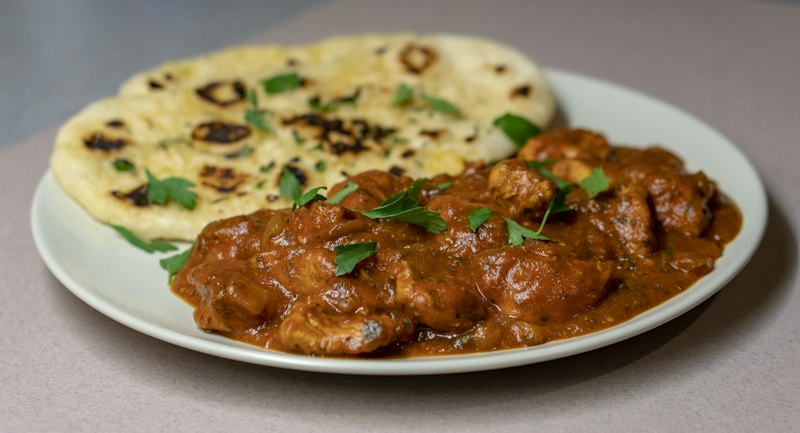
Chicken Tikka Masala
CountrywideA British invention, not Indian — the curry the country adopted as its national dish in 2001. Order from a high-street curry house in Birmingham, Bradford, or London's Brick Lane.
What's in season?
England, month by month
There's no bad month — only a different England each time you come.
Jan
Frost & log fires
Empty cathedrals, frost on cobblestones, log-fire pubs. Lowest hotel prices of the year.
Feb
Snowdrops & first light
Snowdrops in churchyards. Daylight begins to win. Half-term week fills the Lake District.
Mar
Spring awakening
Daffodils in the Lake District. Cherry blossom south. First warmth in London.
Apr
Blossom & lambing
Orchards in blossom in Kent. Lambing in the Cotswolds. Easter breaks crowd York.
May
Bluebells & Bank Holiday
Bluebells in ancient woodlands. May Bank Holiday kicks off festival season.
Jun
Long days, hay meadows
Longest days of the year. Hay meadows in Yorkshire Dales. Glastonbury month-end.
Jul
Heat & heather
Schools out. Heatwaves possible. North York Moors heather begins. Cricket peaks.
Aug
Peak seaside
Cornwall, Brighton, the south coast — full. Book accommodation months ahead. Edinburgh Fringe at month's end.
Sep
Harvest & autumn light
The best month for photography. Hedgerows heavy. Smaller crowds, lower prices.
Oct
Autumn colour
Maple colour peaks in Westonbirt, Wakehurst, the Lake District. Walks at their best.
Nov
Bonfires & frost
Guy Fawkes Night bonfires. First frosts. Empty city footpaths. London quieter than any other month.
Dec
Markets & mulled wine
Christmas markets in Bath, York, Hyde Park. Carol services in medieval cathedrals. Short days.
What experiences can I book?
Keep exploring England
Tap an attraction to open Makutet Experiences, filtered for England.
Book it
The moments worth booking ahead
Moments worth booking ahead — for the moments where curiosity becomes a plan.
WEST END THEATRE
London's theatre district is the most prolific in the world after Broadway — three shows a night is normal. For day-of tickets, try the TKTS booth in Leicester Square.
STONEHENGE INNER CIRCLE
Skip the roadside fence — book a special-access ticket (GetYourGuide) for the inner stone circle at sunrise before public hours. Pair with Bath and Lacock for a day.
BRITISH MUSEUM TOUR
Six million objects in 94 galleries — book a two-hour highlights tour to navigate. The Rosetta Stone alone deserves half an hour.
YORK GHOST WALK
York claims more ghosts per square mile than any English city. Evening tours walk the Shambles and the Minster close; bring a coat.
The story of England
How England came to be
England's story was written by invasion. Roman legions landed in 43 AD and stayed four centuries, leaving behind walls, roads and the foundations of London itself. The Angles and Saxons followed, then the Vikings, and finally — in 1066 — the Normans, whose stone castles still dominate a hundred English skylines.
What grew out of those conquests was something stranger and more durable than any one of them: a common law, a parliament, a language. Magna Carta was sealed at Runnymede in 1215. The Industrial Revolution was born in the valleys of Shropshire, Lancashire and Yorkshire. The world's first passenger railway opened between Stockton and Darlington in 1825.
The visitor doesn't have to learn the chronology to feel the depth of it. You read it in the layered stonework — Roman tile, Saxon church, medieval tower, Victorian railway viaduct — sitting in the same village wall. England keeps its past where you trip over it.
Why this destination?
Why England, and not somewhere else
Why England, and not somewhere else? Because the country trades in a kind of dense, legible continuity that almost nowhere else offers in the same compact space. In a single afternoon you can stand in a Norman crypt, walk a Roman wall, eat in a Michelin pub and catch a world-class show — and be back in a city by nine.
It rewards the slow traveller. The Cotswolds are not a destination you conquer; they are a sequence of villages you discover by getting lost. The Lake District doesn't have a single viewpoint — it has a thousand, each requiring its own walk. The point of England is not what you tick off, but how deep you let it settle.
Measure every other country against this one.
Where to stay
Where to stay in England
Live rates across Booking.com, VRBO, Expedia and Hotels.com — compare in one search, no extra cost to you.
Popular destinations
Live rates across our partner network (Booking.com, VRBO, Expedia, Hotels.com) via Stay22. Makutet may earn a commission when you book — at no extra cost to you. Prices update in real time and may vary before booking.
Flights
Flights to England
Compare fares into LHR, LGW, MAN and regional airports across hundreds of airlines — no extra cost to you.
Loading flight search…
Prices update in real time and may vary before booking.
When to come
Planning your England trip
There is no bad time to visit — only cheaper and cooler.
May – Sep
Long days, mild evenings, and the countryside at its greenest. School holidays push July–August prices up — book accommodation early, especially in the Lake District and Cotswolds.
Apr – May · Sep – Oct
The sensible window. Blossom in spring, autumn colour in October, lighter crowds and lower rates. Weather is less reliable but the light is the best of the year.
Nov – Feb
Short days and long nights. But log-fire pubs, frosty cathedrals, empty footpaths and the lowest hotel prices of the year. London's indoor cultural life carries on regardless.
What else do I need for my trip?
Everything else for your trip

Flights to England
Compare fares into LHR, LGW, MAN and regional airports across hundreds of airlines.
Explore
Where to Stay in England
Live rates across Booking.com, VRBO, Expedia and Hotels.com — no extra cost to you.
Explore
Travel Insurance
Cover for healthcare, trip cancellation and lost luggage — essential for non-UK residents.
Explore
eSIM for England
Activate a UK / European eSIM before you arrive — no roaming shocks.
Explore
Car Hire
Pick up at LHR, LGW or Manchester and explore the fells, moors and coast at your own pace.
Explore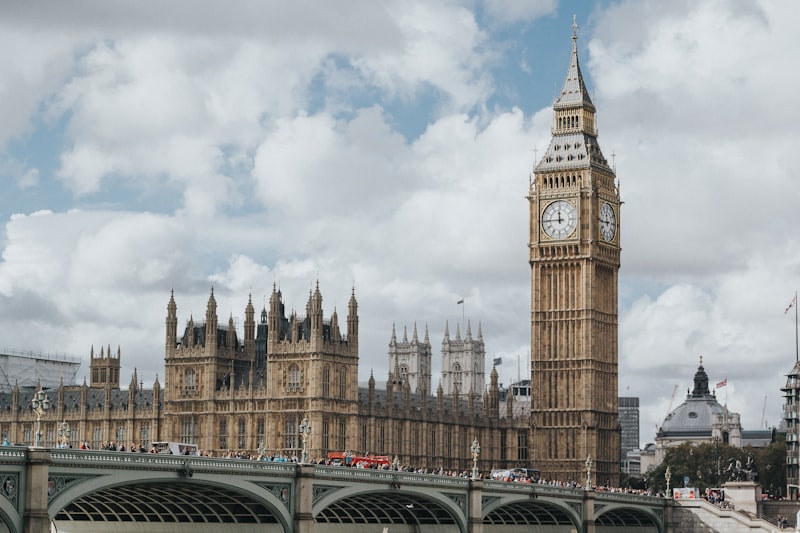
Bookable Experiences
The country's best tours, day trips and skip-the-line tickets — book ahead, walk in.
Explore
Train & Rail Tickets
Advance fares on LNER, Avanti, GWR — and National Express coaches for the cheapest long-distance legs.
Explore
Airport & Train Transfers
From LHR, LGW, STN into central London — and onward to your hotel — pre-booked and fixed-price.
ExploreWhat do I need before travelling?
What you need before you go
Trains & Rail
- ·The national network connects nearly every town — book Advance fares for the cheapest tickets.
- ·London to Edinburgh by LNER in 4h20. London to Manchester by Avanti in 2h10.
- ·BritRail passes for visitors can be cheaper than point-to-point for multi-region trips.
Driving in England
- ·Drive on the left. Speed limits: 30 mph in towns, 60 mph on single carriageways, 70 mph on motorways.
- ·Country lanes are narrow — use passing places, and pull in to let oncoming traffic past.
- ·A foreign licence is fine for up to 12 months; an International Driving Permit is required for non-English-language licences.
Money & Connectivity
- ·Currency is GBP (£). Cards are accepted nearly everywhere; cash is rarely needed.
- ·Mains plugs are Type G (3-pin, 230V). Tap water is safe throughout.
- ·Mobile coverage is excellent in cities and flat in remote fells — load an eSIM before you travel.
Good to Know
England FAQs
Final inspiration
Go and see for yourself
England does not perform for visitors. It simply carries on — and the visitor is invited to slip into the current. Drink in the same pub on three separate evenings and the third night the bar staff will nod at you. Walk the same fell twice and the second time you'll spot the path you missed. The country rewards being seen more than being toured.
Then go. And come back.
One last thing
Build your England trip now
Skip the tabs and the Pinterest boards. Pick where you want to go, when, and how you like to travel — Makutet AI does the rest, with live flights and accommodation in one place.