Travel to Asia in June & July: The Smart Traveller's Guide (2026)
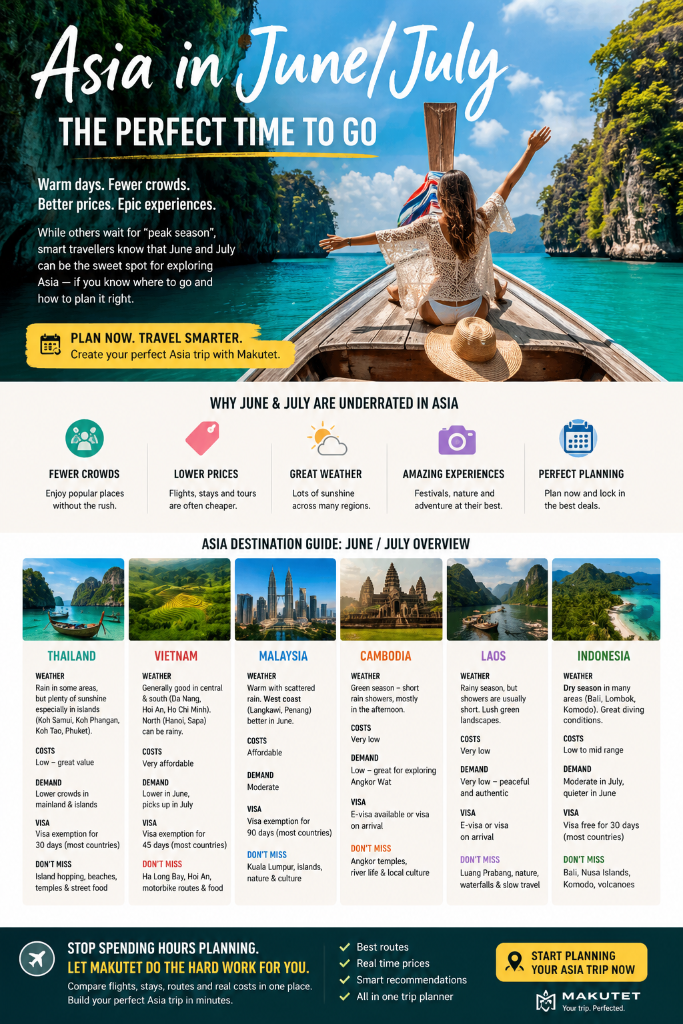
June and July are often overlooked for travel in Asia — and that's exactly why they can be one of the best times to go.
While many travellers wait for peak season, those who understand how Asia works during these months benefit from lower prices, fewer crowds, lush landscapes, and unique seasonal experiences.
The key is not avoiding Asia in June and July — it's knowing where to go and how to plan it properly. This guide breaks down the best destinations, weather patterns, costs, visa requirements, and how to plan a smarter trip.
Why Travel to Asia in June & July?
Lower Prices
Better flight deals, discounted hotels and more availability in top locations.
Fewer Crowds
Quieter beaches, less crowded temples, easier bookings for tours.
Lush Landscapes
Greener scenery, cooler afternoons and dramatic landscapes from short rains.
Better Value
More flexibility, better accommodation options and a more relaxed experience.
Southeast Asia Breakdown — June & July
How each major destination performs across weather, cost, demand and visa.
Thailand
Weather
Mixed. Bangkok & Chiang Mai see some rain. Gulf islands (Koh Samui, Koh Phangan) often better. Andaman side (Phuket, Krabi) can have heavier showers.
Costs
Low to mid-range — excellent value
Demand
Lower than peak, especially outside islands
Visa
Visa-free (typically 30 days for most nationalities)
Best for
Island hopping, food, culture, balanced travel
Don't miss
Island beaches, temples & street food
Vietnam
Weather
Highly regional. North (Hanoi, Sapa): warm, occasional rain. Central (Da Nang, Hoi An): generally good. South (Ho Chi Minh): frequent short showers.
Costs
Very affordable
Demand
Lower in June, increases slightly in July
Visa
Visa exemption or e-visa depending on nationality
Best for
Route-based travel, culture, landscapes, food
Don't miss
Ha Long Bay, Hoi An, motorbike routes & food
Malaysia
Weather
West coast (Langkawi, Penang): best conditions in June. East coast: more rain.
Costs
Affordable, slightly higher than Vietnam/Cambodia
Demand
Moderate
Visa
Visa-free for many nationalities (often 90 days)
Best for
Balanced mix of cities, islands, and nature
Don't miss
Kuala Lumpur, Penang, islands, nature & culture
Cambodia
Weather
Green season — short afternoon showers, lush landscapes
Costs
Very low
Demand
Low — great time to explore Angkor Wat without crowds
Visa
E-visa or visa on arrival
Best for
Culture, history, slower travel
Don't miss
Angkor temples, river life & local culture
Laos
Weather
Rainy season, but showers are usually short. Lush, green landscapes.
Costs
Very low
Demand
Low — peaceful and uncrowded
Visa
Visa on arrival or e-visa
Best for
Nature, slow travel, waterfalls, authenticity
Don't miss
Luang Prabang, nature, waterfalls & slow travel
Indonesia (Bali, Lombok, Komodo)
Weather
Dry season in many areas — one of the best times to visit
Costs
Low to mid-range
Demand
Moderate to high (especially Bali)
Visa
Visa-free or visa on arrival (30 days typical)
Best for
Beaches, diving, islands, volcanoes
Don't miss
Bali, Nusa Islands, Komodo, volcanoes
Weather Reality: What to Expect
Asia in June and July is not "bad weather" — it's dynamic weather.
Costs & Demand: Why You Should Book Now
Waiting for peak season often means higher prices, limited availability and crowded experiences. Booking now for June/July allows you to:
This is especially important for multi-country trips, island destinations, and popular routes.
Visa Overview (Quick Guide)
Most Southeast Asian countries offer visa-free entry or simple e-visa systems:
👉 Always check your nationality before travelling — visa rules change.
Smart Travel Strategy for June & July
Plan Smarter with Makutet
Your Asia Trip in June or July — Done Properly
Build your full trip door-to-door. Compare real travel costs, optimise your route, choose the best places to stay, and avoid hidden expenses.
Start Planning Your Asia TripFinal Thoughts
Asia in June and July isn't a compromise — it's an opportunity. With the right approach, you get better value, more space to explore, and a more authentic experience.
The difference isn't when you travel — it's how you plan it. And if you get that right, this could be one of the best trips you take.


